0
Items : 0
Subtotal :  0.00
View CartCheck Out
Chennai
Chennai
Singapore
Mumbai
Switzerland
+91 44 4091 2000 Mon - Fri 09:00 - 18:30 766/1, TEZ, Sakthi Towers 1, Anna salai, Chennai 600 002.
+6584181583 Mon - Fri 09:00 - 18:30 68 Circular Road, #02-01, 049422, Singapore.
+91 98848 35702 Mon - Fri 09:00 - 18:30 5, Powai Lake Heights, Mumbai 400 072
+41 (0)91 225 81 00 Mon - Fri 09:00 - 18:30 Equvera - ISV Techno SAGL, Via Ligornetto 6A, 6855 Stabio, Switzerland
Ceritified
ISO 9001:2018
The Best
#1 in India
#1 in Europe
#1 in Asian-pacific
Number #1
AUTOMATION SOLUTION PROVIDER
Talk to an Expert
0
Items : 0
Subtotal :  0.00
View CartCheck Out

Electrical design software

Why use electronic and electrical design software?

Products are becoming smarter and more complex as they offer enhanced capabilities, interactivity and adaptability to meet user needs. The E/E systems that support such highly complex functions are also growing in complexity, making the design of electrical, electronic and embedded software and network components more difficult.

To stay competitive, you must find ways to manage this exploding complexity and develop robust E/E systems at an accelerated pace, without compromising quality.

According to Lifecycle Insights’

58%

of engineers report the complexity of electrical distribution systems is increasing or increasing greatly.

66%

of engineers report the complexity of electronics is increasing or increasing greatly.

68%

of engineers report the complexity of embedded software is increasing or increasing greatly.

How do you develop more robust and competitive E/E systems to create more efficient, reliable and functional products — faster and cheaper?

Implement an E/E systems development solution that creates a digital thread, enabling electrical, software, mechanical and other key domains to work together. This integrated approach leads to a more automated development process.

Benefits of electronic and electrical design solutions

An E/E systems development solution enables you to connect your systems, data and people to design and develop high-quality, robust E/E systems. Create E/E systems faster and more efficiently while incorporating all components: electrical, electronic, embedded software and network communications.
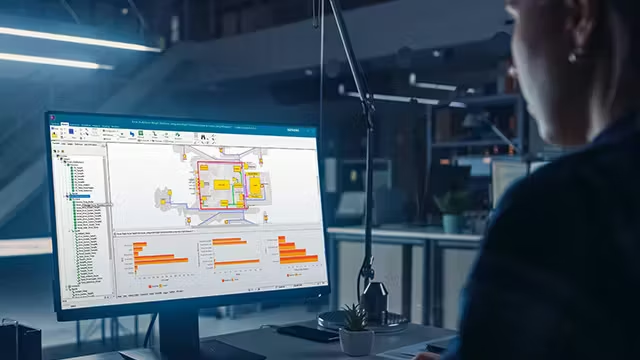

Integrate

Seamlessly integrate with other key systems to create a comprehensive ecosystem that spans the entire product lifecycle. Ensure engineers have up-to-date data to transition from design to manufacturing.

Automate

Embrace the power of automation and the comprehensive digital twin to swiftly and accurately create and optimize designs. Eliminate extensive manual effort and allow for creative innovation.

Collaborate

Blur the boundaries between domains by creating multi-domain visibility. Improve cross-discipline collaboration to get to market faster with less program risk.

Optimize

Create a comprehensive model-based digital twin of your product and processes to achieve optimized electrical, electronic, network and software outcomes.

Accelerate E/E systems design with Capital

Streamline E/E systems development and get the right design the first time. Ensure traceability of components, requirements, design and changes throughout the development cycle. Verify and validate E/E systems early and continuously.

Explore our integrated solutions for E/E systems development:

Explore Capital X

E/E architecture design

  • Achieve configured E/E architecture designs and optimized functional allocations.
  • Optimize E/E architecture against cost, weight and bandwidth targets.
  • Unite functional models with configuration-rich electrical platform context to deliver implementation proposals for multi-domain design.
Capital Systems Architect

E/E data management

  • Achieve adaptable E/E data management and cross-domain integrations.
  • Manage data, control processes and use integrations to provide a full development flow.
  • Manage changes and configurations, both between levels of abstraction within the
    tools and with all major MCAD and PLM software.
Capital Enterprise Mgmt.

Electrical schematic design

  • Achieve robust electrical schematic design.
  • Design, simulate and optimize electrical distribution systems with comprehensive
    model-based schematic authoring tools.
  • Integrate, verify and analyze systems using live metrics and advanced design rule checks.​
Capital Logic Designer

Panel design and collaboration

  • Achieve efficient panel design and collaboration.
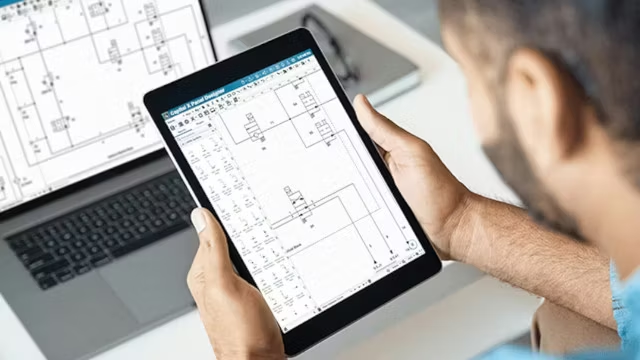
  • Streamline workflows, enhance productivity and collaboration and overcome common challenges in electrical panel design through cloud capabilities.​
Capital X Panel Designer

Harness design and engineering

  • Achieve accelerated harness design and engineering.
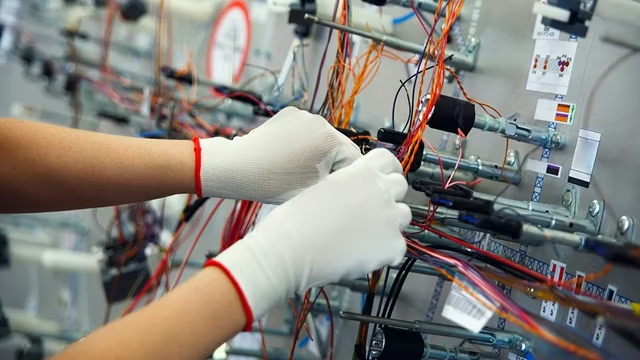
  • Design, engineer and verify electrical harnesses for manufacturing.
  • Optimize costs, processes and documentation to enhance performance, throughput and profitability.​

EDS management

  • Achieve comprehensive electrical distribution system (EDS) management.
  • Create complete and accurate digital mockups that contain mechanical and electrical components.
  • Improve design quality, reduce development costs and accelerate ​time-to-market.
Capital X
Frequently asked questions

How does electronic and electrical design software support E/E systems development?

An E/E systems development solution enables you to simplify and accelerate complex E/E systems development processes. By connecting your systems, data and people, you can design and develop robust E/E systems more efficiently. Our holistic solution incorporates all components of E/E systems: electrical, electronic, embedded software and network communications.
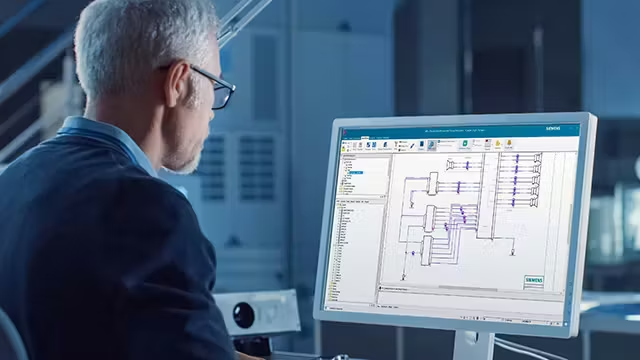
Why should manufacturers adopt an electronic and electrical design software solution for E/E systems development?

An electronic and electrical design software solution for E/E systems development equips your team to avoid inefficiencies and achieve the right E/E systems design the first time. Our solution helps ensure traceability of components, requirements, design and changes throughout the development cycle, as well as verify and validate E/E systems continuously throughout the development cycle. In addition to achieving more automated and optimized development processes, you will be able to realize other benefits, such as:

  • Automation of difficult and repetitive tasks, providing your engineers with more time for creative innovation
  • Reduced development and compliance costs, development cycle times and time-to-market
  • Improved cross-discipline collaboration, enabling better design optimization
  • Reduced project risk, such as late delivery and product recalls

What other solutions can our electronic and electrical design software integrate with?

Our integrated E/E systems development solution is open and interoperable. This means it is built to integrate with other Siemens or third-party systems, such as product lifecycle management, mechanical computer-aided design, application lifecycle management and others. It creates an unbroken digital thread with adjacent domains to ensure seamless access to data and information for a more comprehensive development flow.

How does a model-based approach to E/E systems development enhance the development process?

Model-based E/E systems development enables you to leverage models to delve deeper into the specifics of electrical and electronic components. With this approach, you can address detailed aspects such as circuit designs, software functionalities, hardware interactions and E/E system integration within the larger system. Using these model-based principles, you can automate complex systems integration tasks and continuously verify and validate results.